Omnichannel inventory management
Online and in-store inventory in one system
If you sell on a website and over a counter, you already know the problem: two counts that never quite agree. QRAPID gives brick and mortar and online inventory one record to share.
Why brick and mortar and online inventory drift apart
Most small stores end up with a stock count for the website, another in the register and a third in somebody's head or on a clipboard in the back. Each one is updated at a different time by a different person.
The result is familiar. The website sells something that left the shelf an hour ago. The counter turns a customer away for an item sitting in the stockroom. Staff spend part of every day reconciling numbers instead of serving people. Retail research has found that fewer than half of a store's stock records are typically accurate.
Connecting the systems with nightly imports or a chain of add-ons only moves the problem around. The counts are still separate; they just disagree less often.
How QRAPID syncs online and in-store inventory
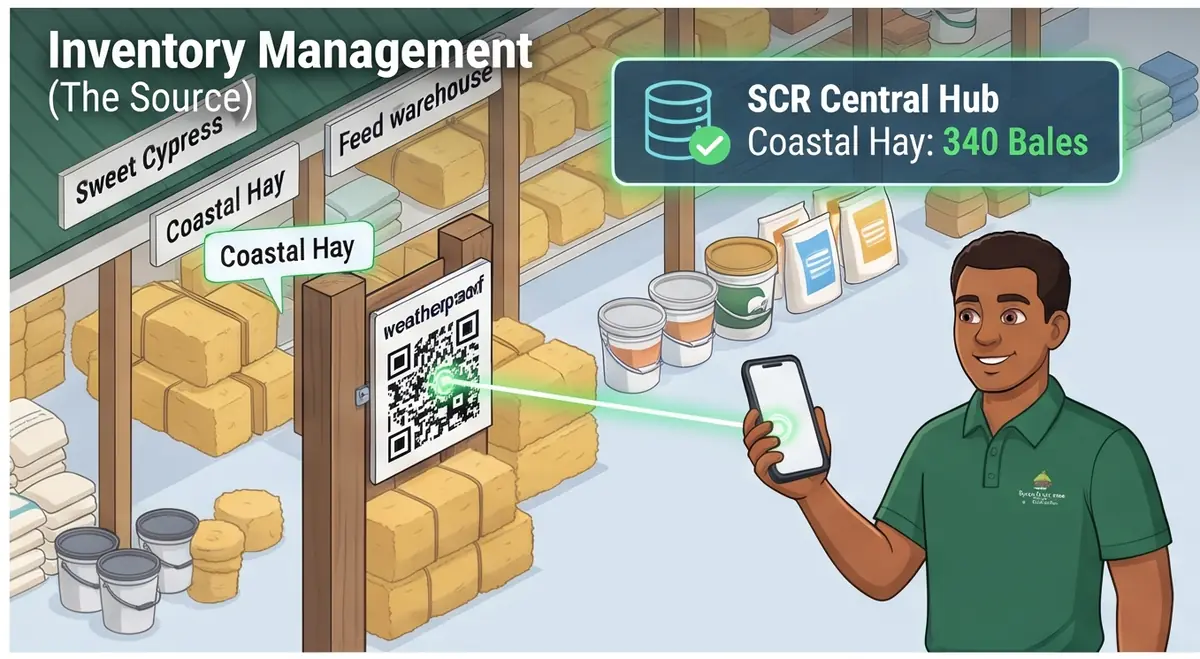
QRAPID doesn't sync two counts. It keeps one. Every product and every shelf spot has a QR code that points to a single fixed record, and every channel reads that record.
- One record per product. Price, unit and stock live in one place, reached by the product's QR code.
- Every sale reserves from it. An online order, a counter sale and a phone order all reserve stock from the same record. Available stock is on-hand minus reserved.
- Stock leaves when the goods leave. The card is held at checkout and charged at pickup or loading, and the count drops for exactly what left.
- People confirm the count. Staff count by scanning shelf-spot codes. Differences go to the owner to approve, with an audit trail.
What changes day to day
- No double-selling: an item reserved online isn't offered at the counter as available.
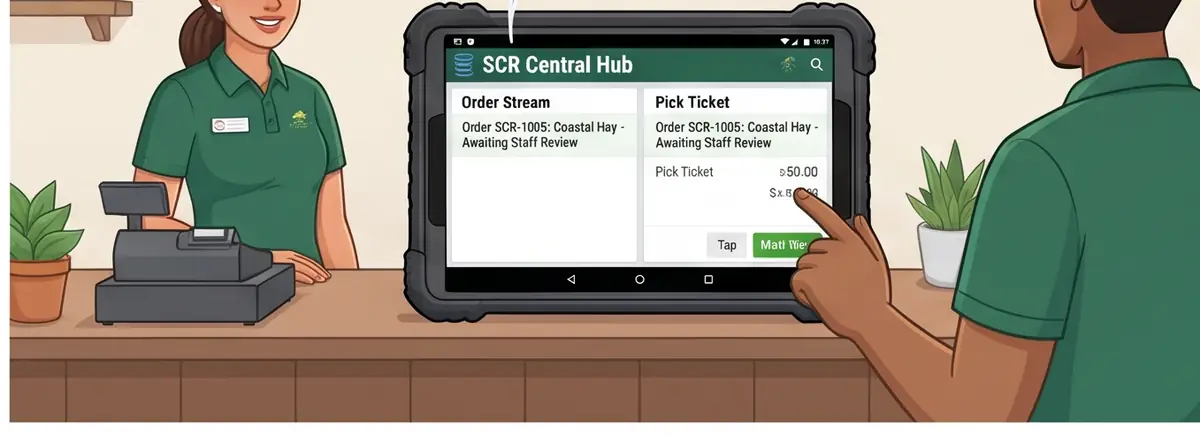
- One pick list: the yard or stockroom works from one list of pick tickets, whatever channel the order came from.
- Honest answers: a scan returns the stored record. An unknown code returns "unknown", not a guess.
- A count you can trace: every change to stock has a who, when and why.
This is what we mean by deterministic inventory management: the same question gets the same answer, on the website, at the register and in the barn. Read the six rules.
Omnichannel inventory without the enterprise price
Large retailers solve this with enterprise systems that take months to roll out and cost five or six figures in the first year. Most local stores need the same single record without the project. We've published what thirteen other systems charge so you can compare for yourself.
Where it stands today
At Sweet Cypress Ranch, status as of November 28, 2026.
Online store, charge at pickup, live order board
3,500+ products, the card held until pickup, and every order on one pick ticket list.
QR records, receipts and owner-approved counts
Every product has a fixed QR record; count differences go to the owner.
Phone counts by QR and photo
Shelf-spot labels and the aisle photo check, waiting to go live.
Questions people ask
- What is omnichannel inventory management?
- It means keeping one stock record for every place you sell, online, at the counter and by phone, so a sale anywhere comes off the same count. Most small stores run two or three separate counts instead, and those drift apart.
- How does QRAPID sync online and in-store inventory?
- Every product has one QR record. The online store, the counter and the stockroom all read that record, so there's nothing to copy back and forth between them.
- What happens if an item sells at the counter while someone orders it online?
- Open orders reserve stock, and available stock is on-hand minus reserved. If an item turns out short at pickup, the customer approves any substitution before the total changes, and the card is charged only for what actually left.
- Do I need new register hardware?
- QRAPID runs on phones, tablets and printed QR labels. Talk to us about what your store already uses.
- Is this only for big retailers?
- No. QRAPID was built for a two-store local business and is priced by subscription for small stores. Pricing will be published once it's set.
OUI · Omega UI, LLC
Own a business? Talk to us directly.
If your online store and your shelves disagree, or you're counting stock by hand, reach the company that built QRAPID.